
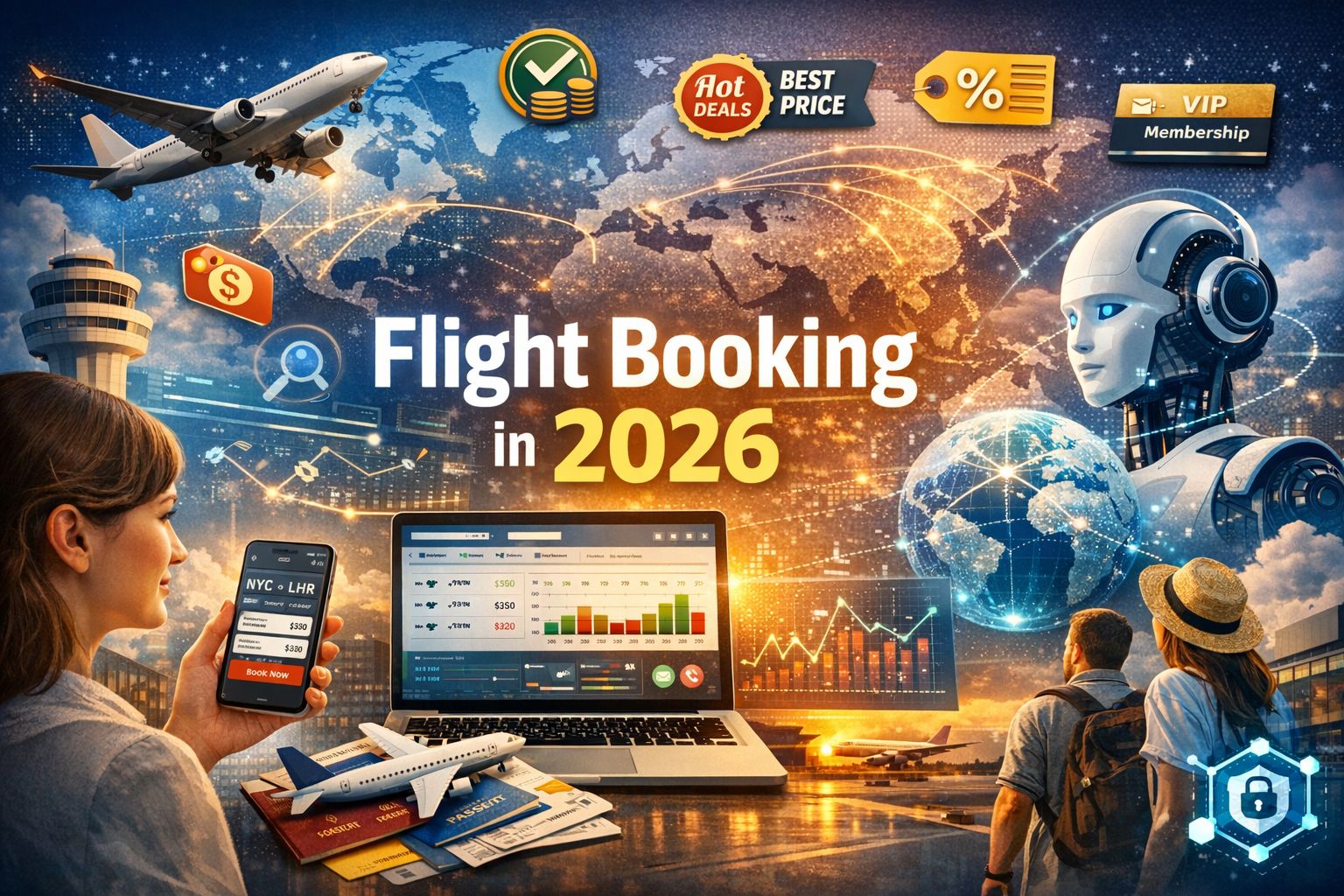
The Current State of Flights & Booking Platforms in 2026: A Practical Guide for B2C Travelers
The global airline industry and flight booking ecosystem have undergone a massive transformation over the past decade, and by 2026, the pace of change has only accelerated. Today’s travelers are navigating a highly digitized, data-driven, and increasingly fragmented landscape of booking options. From airline direct sales to online travel agencies (OTAs), metasearch engines, subscription-based deal platforms, and emerging AI-driven tools—booking a flight has become both easier and more complex at the same time.
This article explores the current state of flights and booking services, the underlying trends shaping the industry, and most importantly, how B2C (business-to-consumer) travelers can intelligently navigate these platforms to secure the best deals and experiences.
1. The Digital-First Flight Booking Era
By 2026, online booking dominates the travel industry. More than 65% of global travel bookings are now made online, with mobile devices accounting for a significant share of that traffic.
This shift is driven by several factors:
- Increased smartphone penetration worldwide
- Seamless digital payment systems
- Real-time fare comparison tools
- Self-service travel management features
In fact, over 60% of all flight bookings are processed online, and mobile bookings alone have surged dramatically in recent years. (Market Growth Reports)
For the modern traveler, this means that the entire journey—from discovery to booking to post-ticket management—can be handled without ever speaking to a human agent.
2. The Rise of Complex Booking Ecosystems
The flight booking ecosystem is no longer a simple airline vs travel agent model. Instead, it consists of multiple interconnected layers:
a. Airline Direct Channels
Airlines increasingly push customers to book directly through their own websites and apps. This allows them to:
- Avoid paying commission to OTAs
- Control customer data
- Offer exclusive deals and add-ons
Recent industry developments show that airlines sometimes even restrict access to third-party sellers, highlighting tensions between airlines and aggregators.
b. Online Travel Agencies (OTAs)
Platforms like Booking.com, Expedia, and Priceline still play a major role by offering:
- Bundled deals (flight + hotel + car)
- Price comparisons
- Loyalty perks
However, partnerships between airlines and OTAs are evolving. Some airlines now selectively allow resale of their tickets to ensure transparency and pricing control. (Reuters)
c. Metasearch Engines
Tools like Google Flights aggregate data from multiple sources, allowing users to compare prices instantly. These platforms do not sell tickets directly but redirect users to booking partners.
d. Deal Aggregators & Subscription Services
Platforms such as Going provide curated flight deals and alerts, helping users identify unusually cheap fares or mistake pricing opportunities.
These services are increasingly popular among flexible travelers looking for maximum savings.
3. Key Trends Shaping Flight Booking in 2026
3.1 AI-Powered Personalization
Artificial intelligence is transforming how users search and book flights. Platforms now:
- Recommend destinations based on past behavior
- Predict price changes
- Offer personalized deals
AI-driven systems analyze vast datasets to tailor experiences, making booking more efficient—but also more opaque in pricing logic.
3.2 Dynamic Pricing & Fare Volatility
Airfare pricing is more dynamic than ever. Prices can change multiple times a day based on:
- Demand fluctuations
- Competitor pricing
- User behavior
This has increased booking complexity by over 20% in recent years.
For consumers, this means timing matters more than ever.
3.3 Mobile-First Booking Behavior
Mobile now accounts for the majority of flight bookings.
- Around 67% of reservations are made via mobile devices
- Desktop usage continues to decline
This shift has led to:
- Simplified booking interfaces
- One-click payments
- App-exclusive deals
3.4 Subscription & Membership Models
Some travel platforms now offer subscription-based benefits such as:
- Exclusive flight discounts
- Priority deal alerts
- Price tracking tools
This model is gaining traction as users seek consistent savings.
3.5 Enhanced Transparency Tools
New features like “price trends” and fare history graphs are helping users make smarter decisions.
These tools reduce guesswork and empower travelers with data.
4. The Role of Technology Behind the Scenes
Modern booking platforms rely on sophisticated infrastructure, including:
- Global Distribution Systems (GDS) like Amadeus and Sabre
- Airline APIs and NDC (New Distribution Capability)
- Real-time inventory systems
These technologies ensure that users can access millions of flight combinations instantly.
Additionally, emerging technologies like blockchain and cloud microservices are being explored to improve transparency, scalability, and trust in booking systems.
5. Challenges Faced by Modern Travelers
Despite advancements, several challenges persist:
5.1 Information Overload
With hundreds of platforms and millions of flight combinations, decision fatigue is real.
5.2 Hidden Fees
Low-cost carriers and some OTAs may add:
- Baggage fees
- Seat selection charges
- Payment processing fees
5.3 Fragmented Booking Experience
Users often switch between multiple platforms:
- Search on Google Flights
- Compare on OTAs
- Book on airline websites
5.4 Data Privacy & Security Risks
As digital bookings increase, so do cybersecurity concerns, with a noticeable rise in data-related incidents.
6. How B2C Travelers Should Navigate Flight Booking Platforms
To succeed in this complex ecosystem, travelers need a strategic approach.
6.1 Start with Metasearch Engines
Begin your search using metasearch tools to get a broad overview of pricing trends.
This helps you:
- Identify the cheapest routes
- Understand price ranges
- Spot anomalies
6.2 Cross-Check with Multiple Sources
Never rely on a single platform. Compare across:
- Airline websites
- OTAs
- Deal platforms
This ensures you don’t miss better pricing or perks.
6.3 Use Deal Aggregators for Premium Savings
For premium travelers, curated deal repositories can uncover exceptional fares, especially in business class.
Useful resources include:
- Cheap business class flight deals
- https://github.com/birdvoyage/Cheap-business-class-flights
- https://gitea.com/birdvoyage/Cheap-business-class-flights
- https://codeberg.org/birdvoyage/birdvoyage-flight-deals
- https://bitbucket.org/birdvoyage/birdvoyage-travel-deals/
- https://gitlab.com/birdvoyage/birdvoyage-airfare-deals
- https://forge-allura.apache.org/u/birdvoyage
- https://birdvoyage.gitbook.io/birdvoyage-docs/
These repositories often aggregate and curate flight deals across multiple sources, making them particularly useful for savvy travelers seeking discounted premium fares.
6.4 Be Flexible with Dates and Routes
Flexibility is one of the biggest cost-saving strategies.
- Mid-week flights can be up to 13% cheaper than weekend departures
- Alternative airports can significantly reduce fares
6.5 Track Prices Before Booking
Use price tracking tools to monitor fare changes over time.
- Set alerts for your desired routes
- Wait for dips in pricing
6.6 Book at the Right Time
Timing matters:
- Book 1–3 months in advance for international travel
- Avoid peak booking days (like Fridays)
6.7 Understand Fare Rules Before Purchase
Always review:
- Cancellation policies
- Change fees
- Baggage allowances
Cheap fares often come with restrictions.
6.8 Consider Loyalty Programs & Miles
Frequent flyers can benefit from platforms like AwardFares, which help track reward seat availability across airlines.
This can significantly reduce travel costs for frequent travelers.
7. The Future of Flight Booking
Looking ahead, several trends will shape the next phase of travel booking:
7.1 Hyper-Personalization
AI will continue to refine travel recommendations based on user preferences.
7.2 Voice & Conversational Booking
Booking via voice assistants and chatbots is expected to grow.
7.3 Blockchain Integration
This could enhance transparency and reduce fraud in ticketing systems.
7.4 Fully Integrated Travel Ecosystems
Future platforms will likely combine:
- Flights
- Hotels
- Ground transport
- Experiences
into a single seamless booking journey.
Conclusion
The current state of flight booking in 2026 is defined by digital dominance, technological innovation, and increasing complexity. While travelers now have access to more tools and data than ever before, navigating this ecosystem requires awareness, strategy, and flexibility.
For B2C users, the key lies in leveraging multiple platforms, understanding pricing dynamics, and using emerging tools—such as curated deal repositories and AI-powered insights—to make informed decisions.
Ultimately, the advantage belongs to the informed traveler. Those who adapt to the evolving landscape will not only save money but also enjoy a smoother and more personalized travel experience.